



 Export PDF
SUMMARY
Managers need timely insight into how their teams are performing, yet constant check-ins slow execution. Performance data exists across tasks, conversations, and effort logs, but it rarely explains itself. Kaamfu introduces AI-powered User Stories that translate activity into structured hourly analysis. Kai delivers performance narratives directly inside the workflow, so leaders stay informed without interrupting their teams.
IN BRIEF
-
Performance needs clarity – Managers require real-time understanding of team output and behavior.
-
Activity creates signals – Load, effort, and responsiveness generate usable performance evidence.
-
AI turns signals narrative – Kai interprets raw activity into structured written analysis.
-
User Stories update hourly – The AI-powered User Stories refresh every hour with worker insights.
-
Kaamfu embeds access – Insight appears directly inside the workflow where managers already operate.
Managers are responsible for output, alignment, and delivery. That responsibility requires awareness of how work is unfolding during the day, not only at the end of the week or quarter. When insight arrives late, decisions lag behind reality.
Inside every team, performance signals accumulate continuously. Tasks open and close. Effort is logged. Messages are sent. Alignment scores shift. These signals hold meaning, yet most systems present them as scattered data points rather than structured interpretation.
Kaamfu introduces User Stories to close that gap. Kai analyzes hourly activity and produces a written performance summary that explains what happened, how the worker is performing, and where attention may be required.
AI That Produces Structured Performance Narratives
User Stories are generated by Kai, Kaamfu’s AI engine. Every hour, the system evaluates workload, activity duration, responsiveness patterns, and alignment scoring. The output is a concise narrative rather than a chart or raw metric feed.
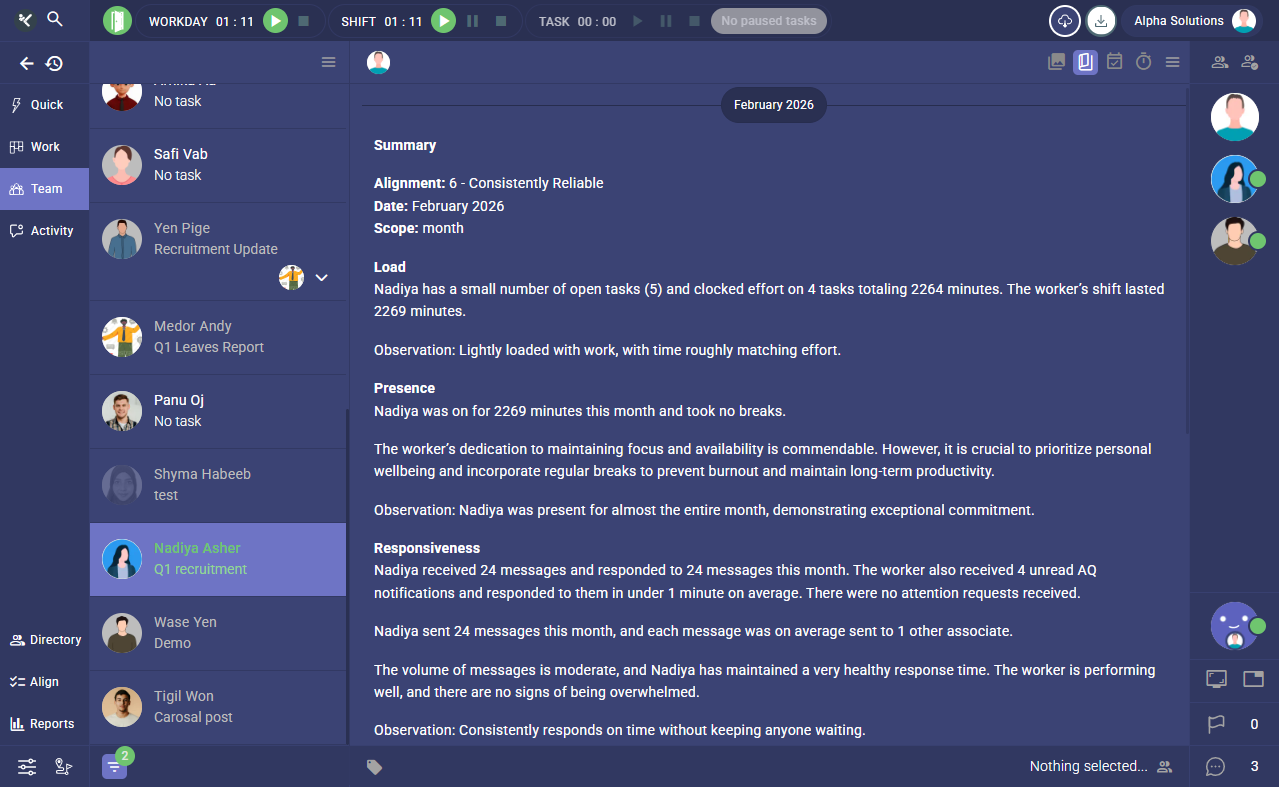
Each story includes observations about open task load, effort distribution, presence during the hour, and response behavior. Instead of requiring managers to interpret timestamps and message counts, Kai converts them into readable insight. The summary identifies patterns and flags structural concerns in plain language.
User Stories extend across timeframes inside the Team panel, allowing managers to review hourly narratives as a developing performance record. The analysis builds context rather than isolating single moments.
This shifts the manager’s role. Leadership becomes guided by interpretation that is continuously refreshed. Insight develops alongside the work itself, supporting earlier intervention and more precise feedback.
Accessing User Stories Without Disrupting Work
Performance insight holds value only if it can be accessed quickly and in context. Kaamfu places User Stories directly inside the environments where managers already operate.
There are two primary access paths:
-
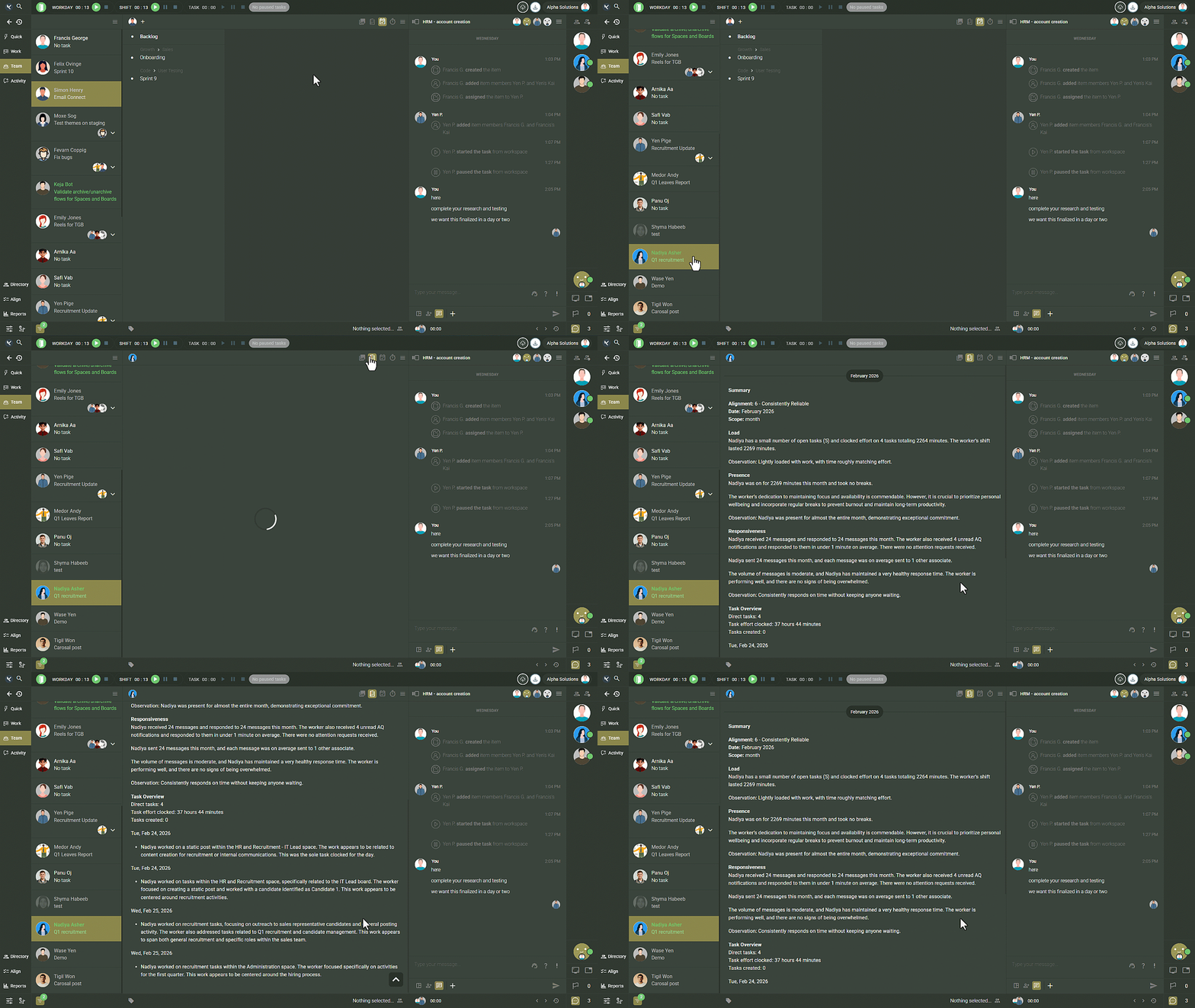
Universal right-click menu – Right-click any worker avatar in the Workline panel, in conversations, or elsewhere to view a short User Story summary. From the universal menu or the Team panel, click the Stories icon to open the full detailed narrative.
-
Team panel context view – Select a worker in the Team panel and open their detailed stories in the main window by clicking on the Stories icon.
These access points eliminate workflow disruption. Managers remain inside the operational surface of the platform while reviewing structured performance insight. The worker’s execution continues uninterrupted.
The result is continuous managerial awareness embedded within the system rather than layered on top of it. Insight becomes part of the environment instead of an external reporting ritual.
User Stories redefine how performance is understood inside Kaamfu. Kai observes, analyzes, and narrates the hour as it unfolds. Managers gain clarity without initiating check-ins or generating manual reports.
As teams scale, structured interpretation becomes essential. Hourly AI analysis ensures that performance insight keeps pace with execution, supporting leadership that is informed, timely, and grounded in operational reality.
How Managers Should Use User Stories
User Stories deliver value when they become part of a management rhythm. The goal is steady awareness, not constant inspection. A disciplined review pattern allows leaders to stay informed while preserving team focus.
A practical approach includes:
-
Review during transitions – Check short hourly summaries before stand-ups or task reassignment.
-
Scan for load imbalance – Identify uneven effort distribution early in the day.
-
Watch responsiveness trends – Notice recurring delays rather than isolated slow replies.
-
Track alignment score shifts – Use alignment changes as early indicators of structural friction.
-
Prepare evidence-based feedback – Reference specific hourly narratives during 1:1 conversations.
This approach keeps oversight grounded in evidence. Instead of reacting to isolated incidents, managers can recognize patterns across hours and days. User Stories then become a leadership tool that supports precision, fairness, and early correction without interrupting execution.