



 Export PDF
SUMMARY
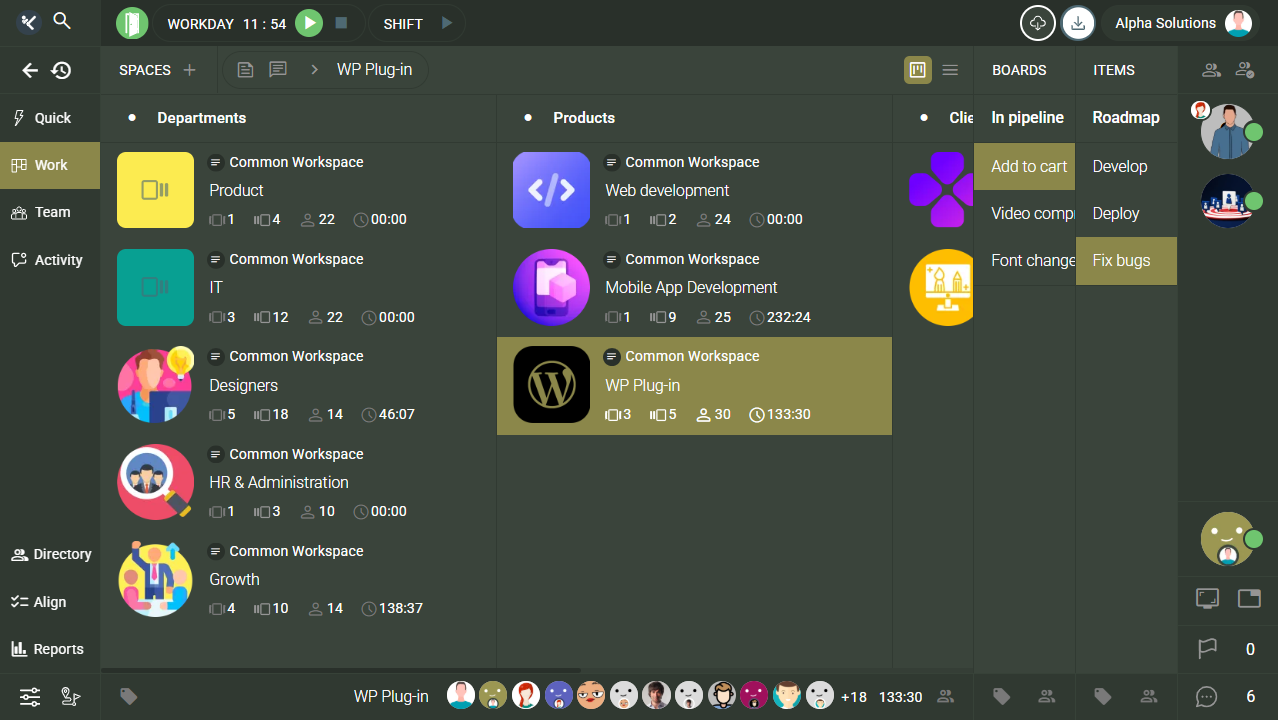
Modern workflows often suffer from extreme fragmentation caused by the disconnection between daily tasks and high-level project goals. This structural gap forces teams to jump between isolated tools, leading to a loss of context and decreased operational visibility. The Work Panel provides a unified environment that eliminates these silos by consolidating all work objects into a single, navigable interface. Kaamfu ensures that every action remains aligned with the broader organizational structure to maintain focus and clarity.
IN BRIEF
- Fragmented digital environments – Professional work is currently scattered across disjointed applications that fail to communicate with one another.
- Manual context switching – Users typically manage multiple browser tabs and software tools to piece together a complete project view.
- Loss of visibility – The conventional reliance on separate tools creates data silos that obscure the actual progress of work.
- Unified structural navigation – Consolidating all work objects into one interface allows for seamless transitions without losing critical operational context.
- Kaamfu systemic integration – By centering all activity within the Work Panel, Kaamfu establishes a cohesive ecosystem where structure and execution coexist.
Work breaks when structure breaks. Most teams don’t struggle because they lack tasks. They struggle because tasks, conversations, documentation, access, and tracking live in different places. Context gets lost. Ownership becomes unclear. Decisions drift away from execution. The Work Panel fixes this by combining structure, membership, communication, documentation, and execution flow into one controlled system.
It is built around three interconnected subpanels and powered by a Kanban layout that turns structure into movement.
The Three Subpanels: Spaces, Boards, and Items
Work inside Kaamfu flows through a clear structural hierarchy.
Spaces are high-level domains such as Projects, Clients, or Departments
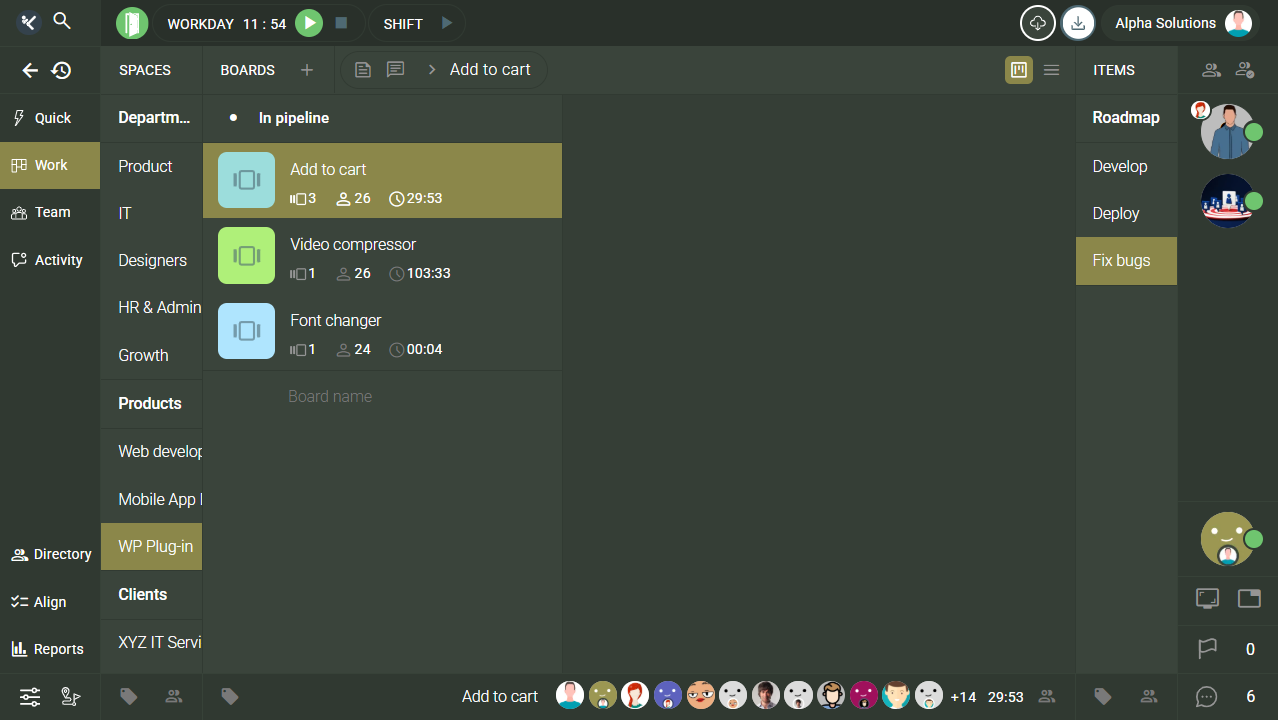
Boards show execution streams inside each Space
Items are individual units of work inside each Board
This layered architecture ensures that no task exists without context and no project exists without structure.
The Work Panel structure is also reflected across the system:
-
Activity Panel: Work progress and events surface here
-
Team Panel: Members and their structured assignments are visible
-
Productivity Panel: Execution data ties back to real objects
Structure in the Work Panel powers visibility everywhere else.
Every Object Is a Controlled Environment
The Work Panel is not just visual organization. It is object-based intelligence.
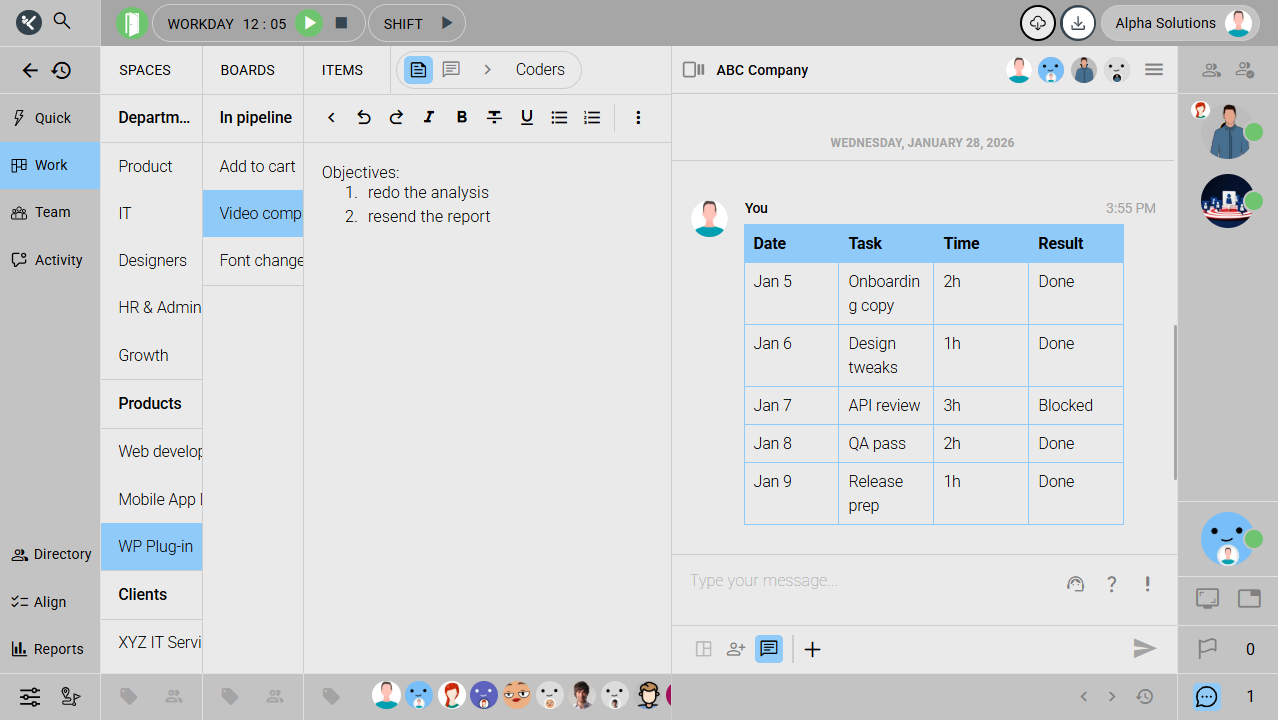
This means every Space, Board, and Item has its own:
-
Discussion Thread: Conversations tied directly to that object so decisions never detach from execution
-
Notes Section: A permanent place for requirements, instructions, or reference material
-
Membership Layer: A defined list of who belongs to that object
Communication does not live in a separate app.
Documentation does not live in a separate folder.
Access does not rely on manual duplication.
Everything lives inside the object itself.
Hierarchical Membership That Makes Sense
Membership follows the same structural logic as the Work Panel hierarchy.
Access is governed at higher levels and cascades downward.
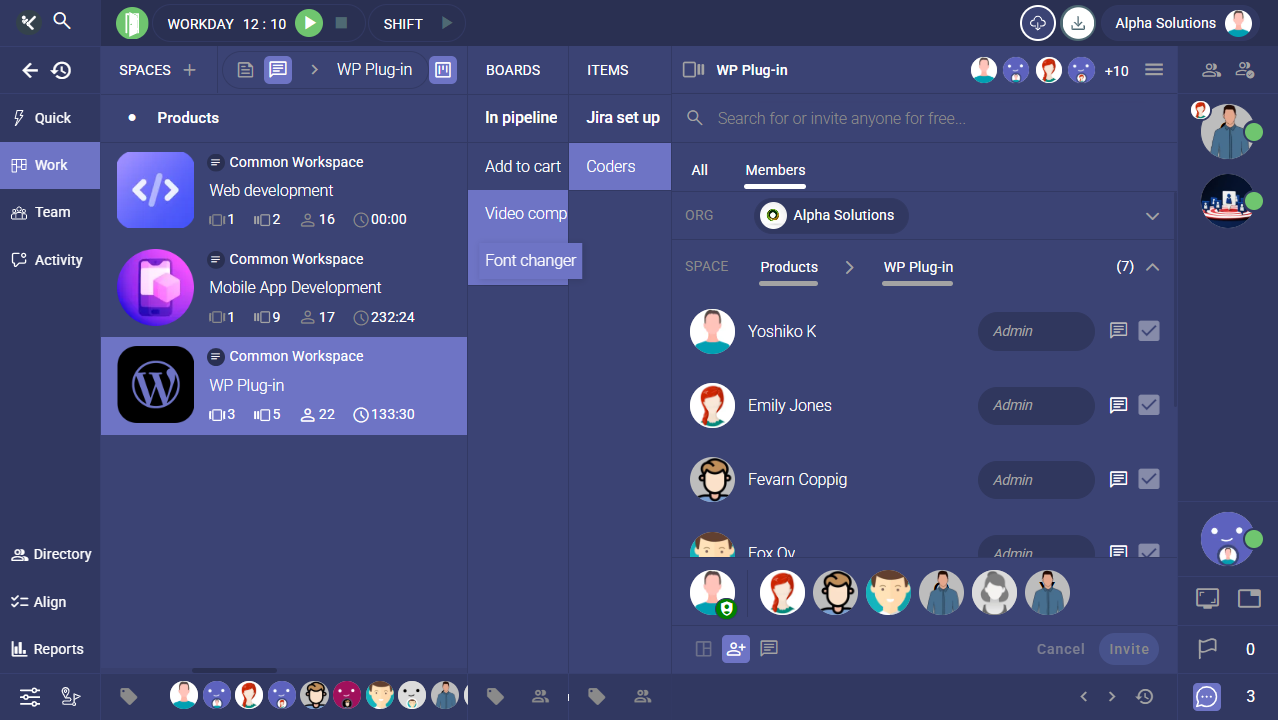
Space Group and Space Addition: Members added here automatically gain access to all nested Spaces, Boards, and Items
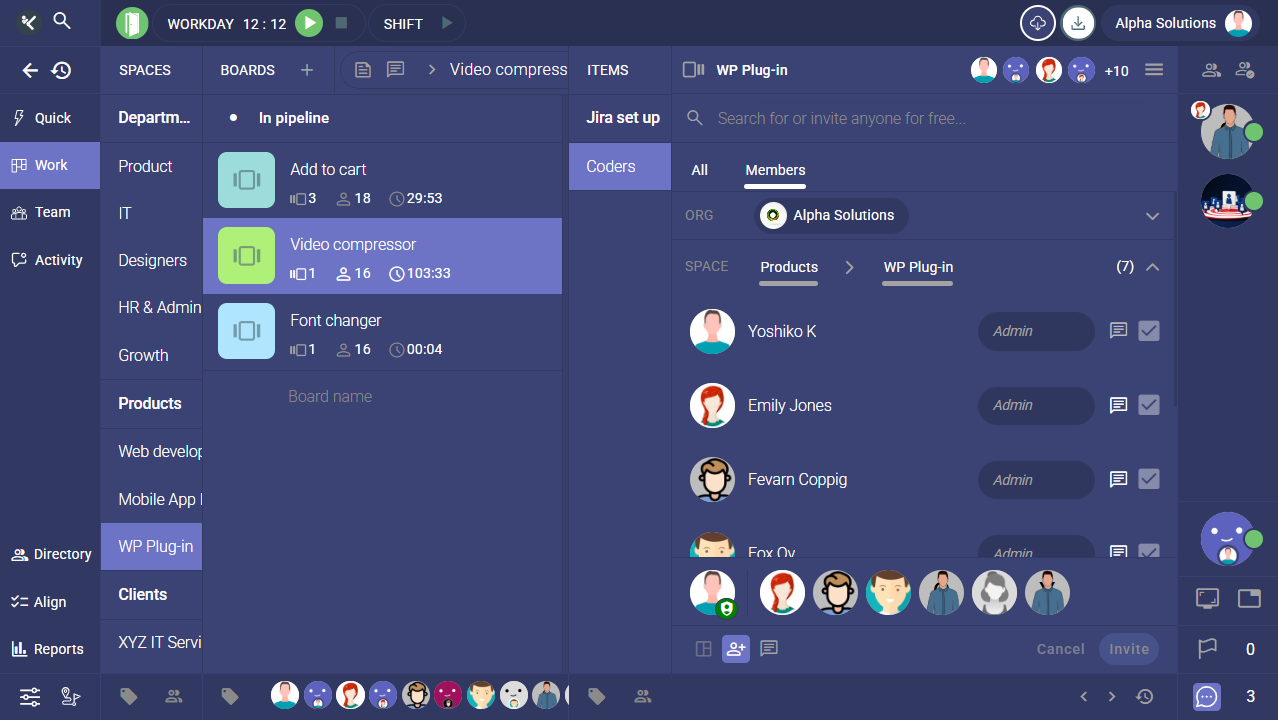
Role Propagation: The same role applies consistently across child objects
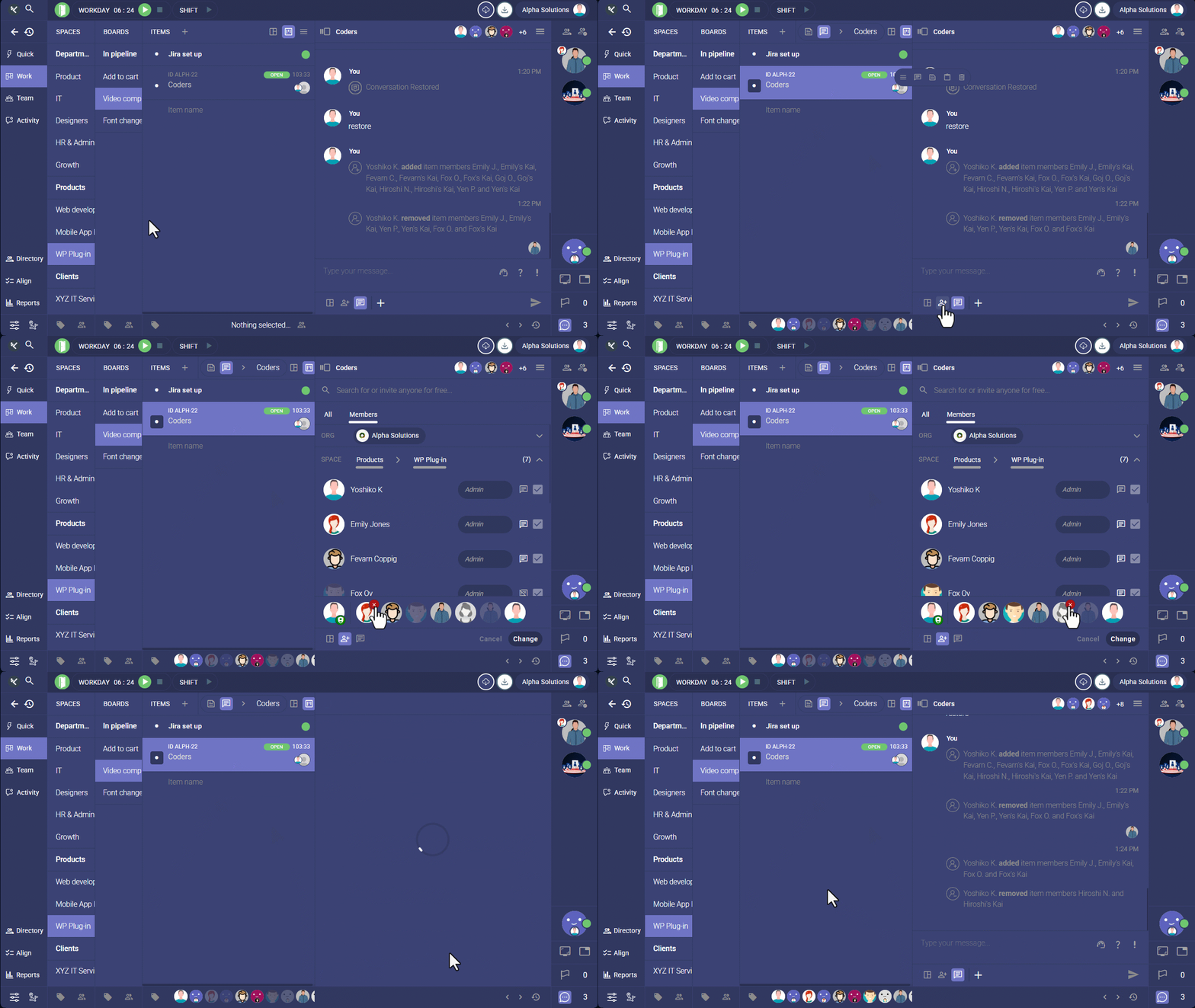
Selective Removal: Members can be removed individually from specific child objects when required
This creates consistency without sacrificing control.
Instead of adding people repeatedly at every level, structure handles inheritance automatically.
Kanban Across the Work Panel
The Work Panel is powered by a Kanban layout.
But unlike traditional project management tools, Kanban in Kaamfu is not just a task board inside a project.
It is applied structurally across subpanels.
Kanban organizes:
-
Spaces Panel: Move and manage strategic domains
-
Boards Panel: Structure execution streams
-
Items Panel: Track task progression
This creates continuity. The same movement logic applies from top-level organization down to task execution.
Why Kanban Matters
Kanban turns static planning into visible flow.
It strengthens execution because it creates:
-
Visual Progression: Work stages are instantly visible
-
Bottleneck Clarity: Stalled columns stand out immediately
-
Movement Discipline: Work must advance, not accumulate
-
Shared Transparency: Everyone sees the same execution state
Instead of buried status updates, progress becomes structural and visible.
How Kaamfu’s Kanban Is Different
Most PM tools treat Kanban as a task list with columns.
Kaamfu treats it as a structured execution layer tied to governed objects.
The difference is structural integration:
-
Object-Based Flow: Items move inside governed Boards, not floating projects
-
Context Retention: Each card carries its conversation and notes
-
Membership Control: Access to work is inherited structurally
-
System-Wide Visibility: Movement reflects in Activity and Productivity panels
In standard tools, Kanban is visual organization.
In Kaamfu, Kanban is controlled execution.
How to Access Conversations, Notes, and Membership
Each object provides direct access to its context and control tools.
To access them:
-
Membership: Click the object and select the Membership icon on the chin
-
Conversation: Click the object and select the Conversation icon from the options menu
-
Notes: Click the object and select the Notes icon from the options menu
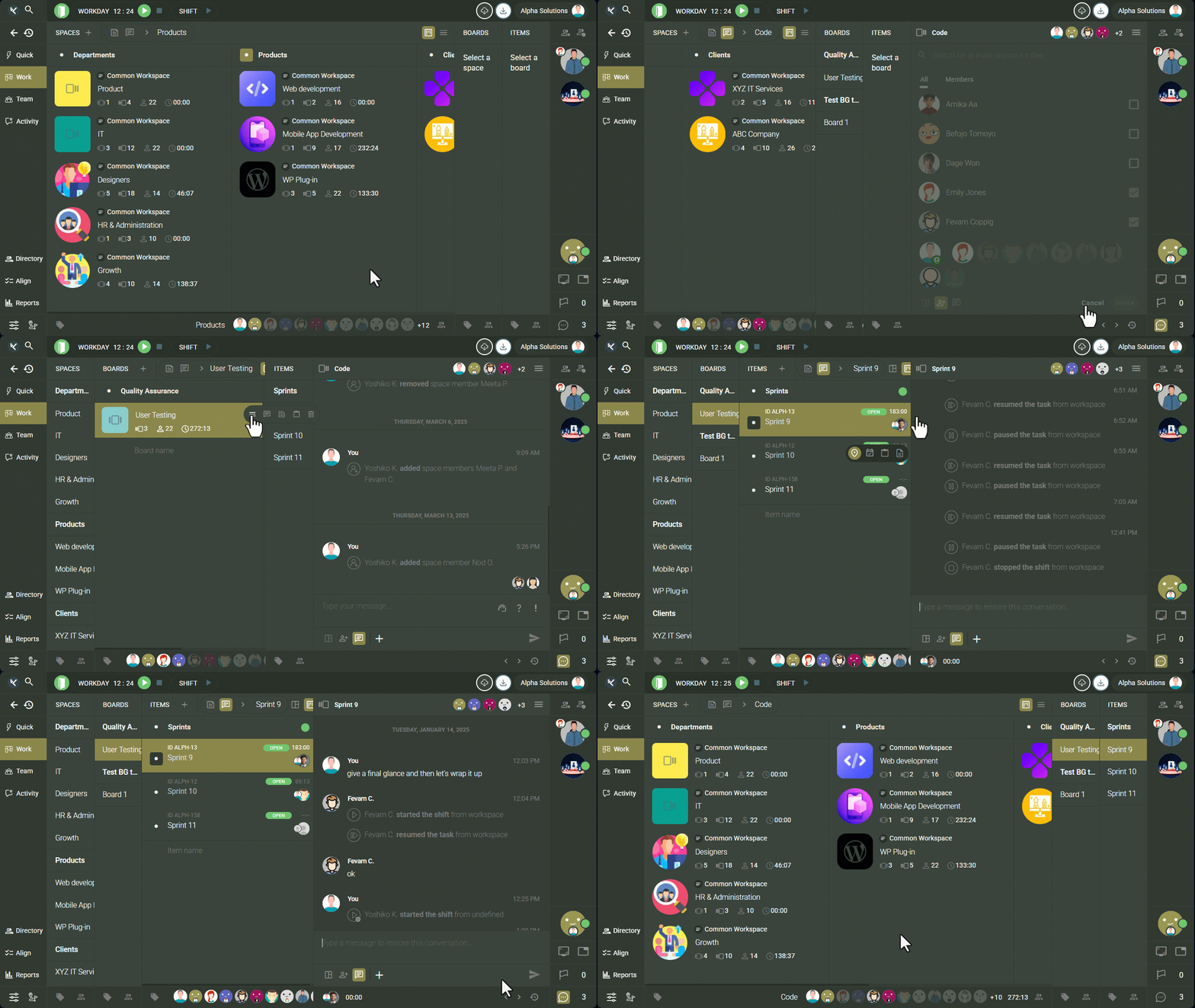
Every object is a self-contained work environment
Why This Eliminates Fragmentation
Traditional work tools separate planning, chat, documentation, and tracking.
The Work Panel unifies them.
Instead of spreading work across disconnected systems, you get:
-
One Hierarchy: Strategy flows cleanly into execution
-
One Flow System: Kanban drives visible movement
-
One Context Model: Conversations stay attached
-
One Knowledge Base: Notes remain structured
-
One Membership Logic: Access cascades predictably
Nothing is detached.
Nothing is duplicated.
Nothing is unclear.
The Work Panel is not just a task board.
It is a structured execution system where hierarchy, flow, communication, documentation, and membership operate together.